Are We Losing Agency to AI?
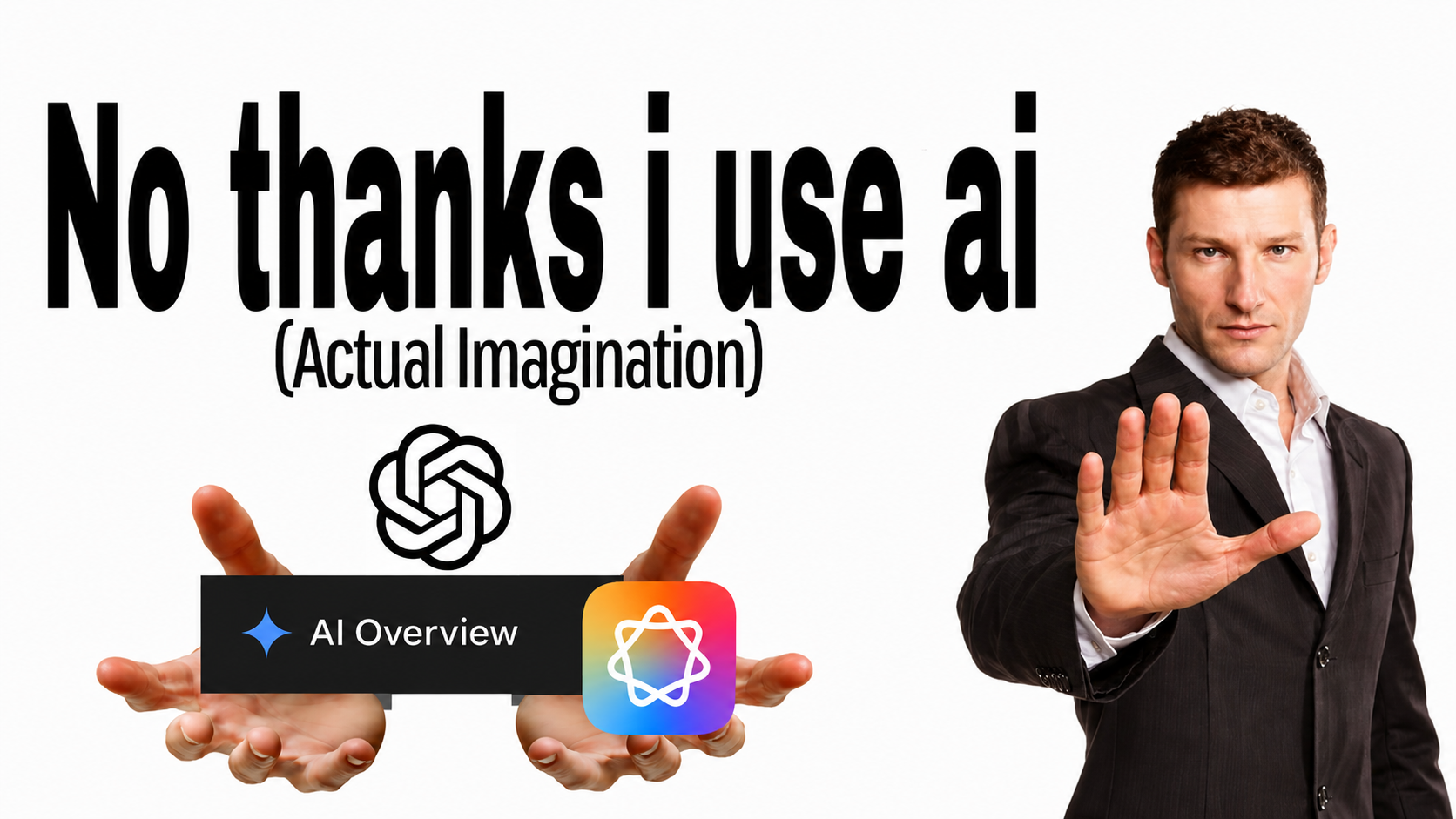
“Is using chatgpt slowly making me stupid?” “AI will replace jobs” “Is AI eroding our critical thinking?”
Ever since the AI boom, the internet has been flooded with these semi-paranoid headlines. After all, given how deeply AI has crawled into our daily lives, wondering about its impact is just common sense, I guess. Yet, the mainstream debate about it often leaves me unsatisfied, as it tends to flatten the issue by jumping to boringly simplistic conclusions. Chewing on all this anxiety over AI outsmarting us, I've recently found myself asking a broader question: are we losing agency to AI? If so, how? What is actually consuming it? Is it really the AI itself, or should we be pointing fingers at a different cast of characters?
First, let me clarify what I mean by agency in relation to AI.
Agency is a concept discussed across several fields like sociology, psychology, and philosophy, and it doesn't have a universally agreed-upon definition. To keep things simple and avoid getting lost in theoretical jargon, I'll use a fairly common understanding of agency as the capacity of human beings to determine their actions.
Now, AI can be used in all sorts of ways: crunching data, making art, drafting emails, seeking emotional support, or even forming romantic and sexual bonds. Precisely because our relationship with AI is so diverse, making one sweeping claim about how it threatens our autonomy isn’t easy. For this reason, I’ll try to identify a common denominator that captures the concern surrounding the (alleged) decline of human agency.
Broadly speaking, if agency is our ability to exercise self-determination, then the risk with AI is that it undermines our autonomous decision-making. This threat generally boils down to two main areas: critical thinking and creative processes.
Of course, the preoccupation with the decline of human skills isn’t new. In fact, it happens every single time a new technology drops. This Forbes article looks back at the massive skepticism that once surrounded GPS devices and calculators. And honestly, these doubts aren’t totally unfounded. A few summers ago, I was reading James Bridle’s New Dark Age (2018), and I remember being struck by an anecdote about people driving their car straight into the sea just because they were religiously following Google Maps (lol).
On the one hand, looking back at how humans have responded to the rise of new technologies helps us avoid slipping into technophobic paranoia, as this is a recurring concern that ultimately proves less catastrophic than expected. On the other hand, it’s worth keeping our guard up. Generative AI isn't a single-purpose tool that merely replaces a specific human action.
On top of being multifunctional, AI engages with us in ways that deeply resonate with our mental structure: it talks back, makes jokes and pleases us. In other words, it possesses features that can easily be perceived as anthropomorphic. This is a considerable game-changer compared to pre-AI technologies.
On an academic level there are various studies looking at how AI might be chipping away at our skills. For instance, the Massachusetts Institute of Technology (MIT) recently investigated the neural and behavioral consequences of using LLMs for essay writing. The findings, show that people who relied on AI were less engaged and exhibited lower cognitive activity. Interestingly another study on the cognitive cost of AI reveals how the prolonged use of artificial intelligence is linked to a drop in both decision-making abilities and self-confidence. Based on this evidence, it's fair to argue that AI can actively erode human self-determination, sabotaging not just the quality of our mental effort, but also the trust we place in our own brains.
Assessing the impact of AI specifically on artistic creativity is trickier, mostly because creativity is hard to measure. In Is AI a Threat to Human Creativity? Madoc Wade frames the threat posed by AI as both direct (when it renders human creativity irrelevant) and instrumental (when, due to its low cost, AI replaces people who perform paid creative tasks). In his view, as AI becomes cheaper and more accessible, it can be detrimental to the people who make a living from creative work, as they may no longer be recruited. Yet, he argues, human creativity itself isn’t under attack. Taking the relationship between art and technology a step further, Valentina Tanni’s Conversazioni con la Macchina (Conversations with the Machine, 2025) offers an interesting reflection, arguing that the dialogue with AI can even add to the artist's creative process.
After this brief reflection, it might seem like the answer to whether AI is eating away our agency leans toward a “yes”. But even with all these warning signs, this stance still feels off to me.
What I believe is that AI models are merely the tip of the iceberg, serving as the visible face of a much more multifaceted problem. Blaming them for our shrinking brainpower falls into a done to death black-and-white narrative. Instead of scapegoating the tech, we should complexify our question.
What makes the effects of artificial intelligence so worrying is the constant presence of AI in human activity, so we’d better ask ourselves what hidden systemic pressures drive us to rely on it so heavily.
One of the few things I genuinely enjoyed during my Bachelor's degree was reading Acceleration and Alienation (2010) by Hartmut Rosa. According to the German sociologist, technological advancement only appears to give us the tools to optimize our lives by saving us time on everyday tasks. In reality, the opposite happens. As technological acceleration speeds up, the amount of time at our disposal actually decreases, because the number of tasks we are expected to perform does not stay the same but multiplies. Needless to say, this creates considerable distress. It's like being on a slippery slope where if you stop, you're fucked.
Rosa’s insight helps identify one of the drivers behind the frequent reliance on AI: fatigue.
AI offers an appealing way to relieve this exquisitely postmodern form of exhaustion. At its core, we use it mostly because we’re too overwhelmed and, honestly, can we really blame anyone for offloading the task of writing the umpteenth email of the day to ChatGPT?
Whether AI actually saves us any time is highly debatable. But even if it just feels like it does, it seems clear that it functions as a strategy to get through as many tasks as possible. And it’s not because we have some innate urge to overachieve; it’s because the system constantly demands more from us. ASAP.
Beyond that, contemporary society is shaped by hyper-competitiveness and a neoliberal obsession with productivity that feeds on our emotional investment. It’s no longer just about the mountain of work we have to deal with, but rather about the fact that we’ve been conditioned to tie our entire self-worth to how much we get done.
This dynamic is so subtle that it doesn’t even require any external force explicitly pushing us to take on more and more work. Instead, we internalize the pressure ourselves. How Foucauldian.
Digital culture reveals an uncanny obsession with this so-called self-improvement. Whether it’s preferring matcha over coffee, locking in for the 75 Hard, becoming a pilates princess, adopting the clean girl aesthetic, or engaging in insert-whathever-you-like-maxxing, everything shouts self-imposed discipline (and consumerism) rather than actual self-love.


In a world where you are constantly expected to be "on," setting aside time to cultivate your passions stops being spontaneous and it becomes just another item on your to-do list. As everyday life becomes gamified, leisure is less and less pure enjoyment and increasingly a question of how many books you've tracked on Goodreads, how many films you've logged on Letterboxd, or how many steps your phone has counted. I also catch myself trapped in this loop, feeling pressured to optimize my free time and rigidly track it. This mechanism permeates many aspects of our lives, and it’s draining. In this context, AI becomes a quite tempting shortcut.
Is this problematic or even simply questionable? Absolutely. And just to be clear, I have no intention of defending or promoting AI. I'm just trying to make sense of why this phenomenon has taken over. At the same time, I don’t feel comfortable writing AI off completely or putting its haters on a pedestal. Sure, you can choose to "reject modernity and embrace tradition" but that’s exactly where the trap lies. If you do, you risk falling behind. And falling behind does not translate into possible pragmatic negative consequences only, but it also has an emotional cost.
While internet culture offers the ground to the cult of productivity, it also reveals the opposite side of the coin giving space to "brainrot" content. This aesthetic has been thoroughly commodified for GenAlpha with merchandise, but its more memetic side has taken a firm hold on GenZ. The endless scrolling sessions that pretty much all of us have spiraled into at least once are already a desperate attempt to just shut our brains down. The very fact that "brainrot" became a viral phenomenon in the first place is deeply telling of a broader, collective existential tiredness. Other trends, like "bedrotting," point to the exact same fatigue. These aren't just silly internet fads; they are coping mechanisms for the relentless pace of everyday life that throws us into a systemic burnout.

The misperception of technology is another point to consider when reflecting on AI use. As usual, postmodernity is paradoxical; a place of coexistence of everything and its opposite. While it is incredibly common to hear that "social media is fake" or that "the media is lying to us," we somehow still grant technology a profound level of baseline trust. This misperception stems from a false sense of neutrality that we attribute to technological devices. Like god-like creatures, algorithms seem omniscient, ready to grant us any answer we seek. And they do…except that the answer they give might be the child of a heavily biased dataset. Maybe nowadays there's slightly more awareness about the non-neutrality of the internet, but AI hides its inner workings so deeply that a new kind of blind trust is taking over. This doesn't simply hit our critical thinking but actively magnifies racist and misogynistic biases.
This perceived need for AI and our blind trust in it are easily tied to the crisis of critical thought. When it comes to art, the reason at the base of AI use is far more pragmatic, lying in financial convenience. For instance, Kenneah March Dimacali notes that the true appeal of AI-generated art lies in its low production costs. Once again, the culprit isn't the technology itself, but the socio-economic framework it operates within. The issue of AI in the creative field is deeply multilayered, tangled up in ethical issues like copyright theft, as AI algorithms improve at the expense of artists who never gave their consent. We could think of “AI slop” as the paroxysm of generative AI’s artistic use, where monetization is the sole purpose of the creative process. Ironically, even the fierce online opposition to low-quality AI content, by relying on rage-baiting, ends up boosting engagement and, therefore, profit.
When you strip all of that away, I think it’s more correct to say that we’re losing our agency to neoliberal capitalism far more than to AI. Capitalism has engineered an impoverished world where quantity completely suffocates quality, and where the only thing that matters is continuous, relentless output. Capitalism itself is a slop: a degraded copy of its own promises that nevertheless continues to extract value. Therefore, rather than obsessing over what is stealing our agency, we need to understand why we are giving it away so easily. Reframing the debate this way isn’t about quibbling over semantics; it is a necessary attempt to ask the right questions so we can actually navigate the present.
Moreover, my call for a more precise social analysis of the human-AI relationship arises from a lingering doubt: I suspect much of the public anxiety surrounding the loss of human agency doesn't actually stem from a genuine concern for our cognitive or creative well-being. Instead, it often feels like an unproductive, reactionary stance as well as a reluctance toward technology that strikes me as entirely anachronistic. The issues surrounding AI shouldn't be ignored, but they must be situated within the specific socio-economic landscape from which they emerge.
Ultimately, I find myself wondering why the decline of human agency terrifies us so deeply. The rise of the machine has always haunted our collective imagination in sci-fi literature and cinema. It’s not unwarranted to feel put on high alert by what we perceive as a potential and unpredictable intrusion by a non-human entity. But our panic isn't just about survival instinct. The threat to human supremacy fundamentally unsettles centuries of deeply ingrained anthropocentrism.
If you'll let me lean into my gender studies degree (and my passion for Rosi Braidotti<3) for a second: the shaking of human centrality might also have to do with an intrinsic, not always conscious, anxiety over human displacement. I'm not here to advocate for a machine takeover, but perhaps reflecting on our relationship with the other-machine can be a provocative exercise in reimagining a posthuman world where pyramidal systems of power are deconstructed.